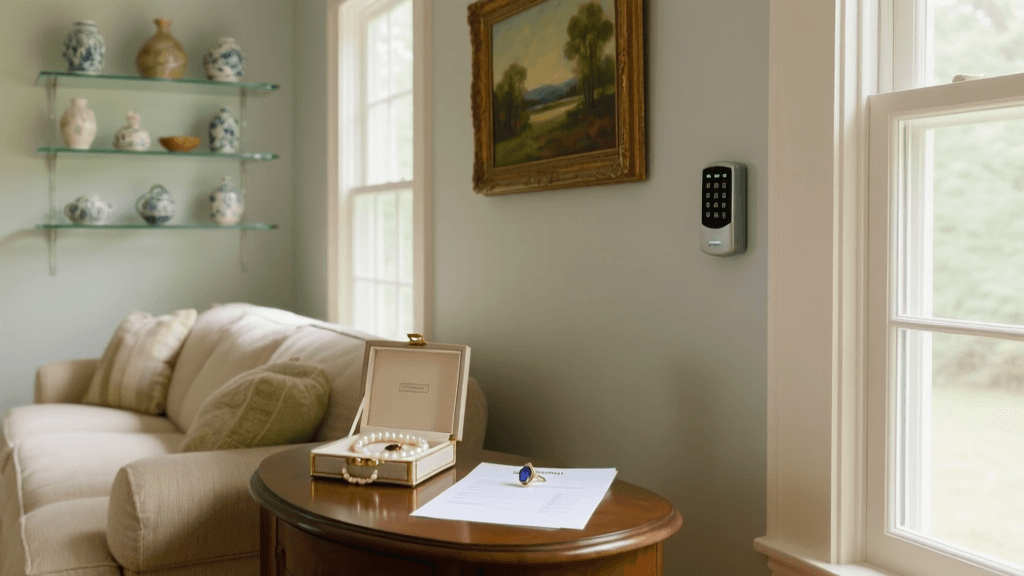
Why Consider Scheduling Valuables in Woodstock?
A homeowners policy can provide personal property protection while still applying special limits to certain valuable categories. Jewelry, watches, fine art, musical instruments, and collections may have individual or category caps for specific losses, such as theft. That means a household limit of tens of thousands of dollars does not necessarily mean a single ring or painting is covered for its full value. For Woodstock homeowners, scheduling is worth reviewing when an item is costly, difficult to replace, or especially meaningful. This guide explains what scheduling generally involves, which records to gather, and what questions to ask before deciding whether the added coverage fits.
How Homeowners Policy Limits Can Affect Valuable Items
A special limit is a maximum payment that may apply to a category of property or a particular type of loss. The exact amount and covered causes of loss depend on the policy, so homeowners should read the wording rather than assume every item is covered the same way. For example, a family in Woodstock might own several pieces of jewelry whose combined value exceeds the policy’s theft limit. A covered loss could then result in a payment far below the replacement cost, subject to the deductible and other terms. Check whether the limit applies per item, per occurrence, or to the entire category, and ask how the policy treats mysterious disappearance, accidental damage, and breakage.
What Scheduling Means
Scheduling means listing selected possessions separately on a policy, usually with a description and an agreed or documented value supported by an appraisal, receipt, or other acceptable record. Depending on the insurer and endorsement, scheduled coverage may provide broader protection or different limits than the standard personal property section. It is not automatic protection against every situation: exclusions, deductibles, claim conditions, and geographic restrictions can still apply. A Woodstock homeowner considering scheduling should request the actual endorsement wording and compare it with the base policy. Ask whether coverage follows an item while traveling, whether a deductible applies, and how a claim value is determined if an item is damaged or cannot be repaired.
Which Items May Be Worth Reviewing?
Start with possessions that could exceed a standard category limit or that would be challenging to replace. Engagement rings, heirloom jewelry, luxury watches, original paintings, sculpture, antique furnishings, professional musical instruments, rare coins, and sports memorabilia are common examples to discuss with an insurance professional. Value is not always obvious: a collection may have grown over years, and market prices can shift. A Woodstock resident who plays gigs around Canton or Marietta may also take an instrument outside the home regularly, making travel and use conditions important to confirm. Make an inventory first, then identify which items have reliable documentation and which may need a specialist’s assessment.
Build Reliable Valuation and Ownership Records
Good records make it easier to identify property and substantiate its value after a loss. Keep receipts, certificates, prior appraisals, serial numbers, and written descriptions where available. Photograph each item from several angles, including identifying marks or distinctive details, and store the records somewhere separate from the valuables, such as secure cloud storage. For fine art, an appraisal should describe the work and explain the valuation basis; for jewelry, include metal, stones, condition, and identifying characteristics when known. Ask the insurer how recent an appraisal must be and whether it must come from a qualified specialist. Revisit values after major purchases, renovations, inheritance, or meaningful market changes.
Compare Coverage Details, Not Just the Listed Value
A scheduled amount is only one part of the coverage decision. Ask whether the policy pays replacement cost, an agreed amount, or another measure of value, and whether depreciation may be considered. Clarify how partial damage, repairs, pairs, and sets are handled. A ring that is stolen while traveling, a painting damaged by a sudden leak, and a watch misplaced during a move may each be treated differently under policy terms. Also compare premiums, deductibles, exclusions, and any requirements for alarms, safes, or professional packing. Homeowners in Woodstock should disclose how items are used and where they are kept; accurate details help the insurer assess eligibility and avoid surprises at claim time.
Local Considerations for Woodstock Households
Woodstock households may move between home, work, school, concerts, and weekend activities across Cherokee and nearby counties, so it is useful to understand whether valuable items remain covered away from the residence. A musician traveling from Woodstock to a performance in Kennesaw or Roswell, for example, should ask whether the instrument’s use and transit are included. Homeowners who display art should ask how the policy responds to covered water damage and whether special handling or storage conditions matter. If an item is kept in a detached workspace or another location, disclose that detail. Local weather and home maintenance also matter: document possessions and keep them away from avoidable risks, while relying on policy wording—not assumptions—to determine what losses are insured.
A Practical Checklist Before You Schedule
Useful Steps for Woodstock Homeowners
- Review the homeowners policy for special category limits, covered causes of loss, deductibles, and exclusions that could apply to each type of valuable.
- Create a household inventory with clear photographs, descriptions, purchase records, certificates, serial numbers, and appraisals where available.
- Ask whether each item needs a separate schedule, what valuation documentation is accepted, and how often values should be reviewed.
- Confirm coverage away from home, during travel or performances, and while an item is being repaired, shipped, or stored elsewhere.
- Compare the premium and endorsement terms with the potential out-of-pocket cost of replacing the item, without assuming scheduling removes all exclusions.

Choose a Useful Next Step
Begin by gathering your current policy, a short inventory, and the best records available for your highest-value possessions. Mark items whose individual value may exceed a category limit, along with anything regularly taken outside the home. Then ask for a policy review that compares the existing protection with the terms and cost of scheduling those specific items. A Woodstock homeowner does not need to appraise every possession before starting; an initial conversation can identify which documents are needed and whether a specialist appraisal makes sense. Revisit the inventory when you acquire, sell, inherit, or significantly restore an item. Clear descriptions and updated values help keep coverage decisions grounded in the property you actually own.
Review Your Valuable Property Coverage
Gather your policy and item records, then compare available options for jewelry, art, and collectibles.
Get a Free Quote